








A mystery in the past
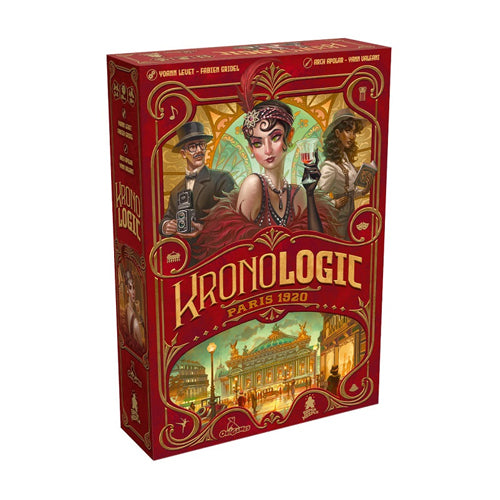
Mysteries are there to be solved and this is deduction game like any other. If you have played Kronologic: Paris 1920, you very much know what to expect, but this game defies the genre clichéd choice of just being a murder mystery, and instead opts for you to solve unexplained events or affairs, such as finding a sacred site something took place.
Set the city of Cuzco, during 1450, you will work your way through a series of Inca-themed mysteries.
What treasures are buried inside?

This is a small box of treasures. Packed inside you will get a shared board, which is the map of Cuzco, six character and six time tiles, three scenarios containing around 90 cards, a pad of player sheets to mark off as you go and some tiny pencils. You also get four player screens to hide your deductions from other players.
A mystery in the past
Mysteries are there to be solved and this is deduction game like any other. If you have played Kronologic: Paris 1920, you very much know what to expect, but this game defies the genre clichéd choice of just being a murder mystery, and instead opts for you to solve unexplained events or affairs, such as finding a sacred site something took place.
Set the city of Cuzco, during 1450, you will work your way through a series of Inca-themed mysteries.
What treasures are buried inside?
This is a small box of treasures. Packed inside you will get a shared board, which is the map of Cuzco, six character and six time tiles, three scenarios containing around 90 cards, a pad of player sheets to mark off as you go and some tiny pencils. You also get four player screens to hide your deductions from other players.
There are some small tokens that are also used to mark off dead ends on the map. Which is a nice edition to the series, as it allows for the map to be varied from game to game, and also leaves you another consideration as you think about the evidence you have.
Time to investigate
If you have played Kronologic before, you know what you are going to get.
Set up is really simple. You set up the board, and place all the character and time tiles within reach of all players.
Chose you scenario and which mystery within that you wish to play and then read the little booklet provided to know where to place the blocked paths on the board and discover what mystery you are trying to solve. Deal out all of the cards related to your chosen mystery, ensuring they are face down and cannot be seen by any player.
Each player then takes a screen and a sheet from the pad and a pencil.
You are ready to don your deer hunter hat and solve your mystery.
On a turn, a player chooses a card, essentially a location choice, and then chooses either a time or character tile. Without showing other players, you slide the card under your chosen tile to reveal key information. One piece of information will also be shared with your gaming group.
You will then mark the information on your player sheet (or the information shared with you) and play continues to the next player.
Information revealed could be anything from where a character was, how often they may have been there, how many characters may have visited a location, pieces and clues to help you piece together the movements of your suspects.
At any time, once a player is ready to try and solve the mystery, they can secretly look to see if they are correct.
Get it wrong… and you are out of the game.
Get it right? Well done, but wait for any other players to check their answer if they wish to also try and solve the mystery. Once all players have checked, those who were right can now reveal they have made literature's favourite detective proud.
Final musings on the mystery

If you enjoyed the first Kronologic game, you will enjoy this. New time in history, new mysteries, same gameplay. If you haven’t… do not worry, you do not need to play the first game to enjoy this.
This game offers all of the familiar gameplay from the first game, with extremely well written and simple rules, but without just being a re-themed package. There is no copy and paste mystery here, and it was really refreshing that in our first game, we were just trying to solve when two characters were together at a sacred place, no murder which is what we went in expecting.
The other nice thing about the Kronologic games, which has held true in this follow up in the series, is speed of play. A lot of deduction games can be a drawn out affair, but this one will be played start to finish in around 20-30 minutes.
The components are well considered, there is nothing has been added beyond what is needed to keep the game smooth and streamlined. Considering they are all card based as well, the quality for price point is very good, you feel like they will last the test of time (no pun intended).
Overall, this is a game for deduction fans looking for something snappy and a little different, but also those looking to try out their first deduction game to see if it something for them.
With future timelines (and yes that is an unsubtle nod to the newly announced title) already in the making. We will no doubt look forward to getting our hands on that to see what is different but very familiar again.
Peaches and Meeples
We are Peaches and Meeples, busy professionals who love to chill out to fun table top games. We love board games, card games, miniatures games, competitive or co-operative. Put some dice in our hands and we are in our happy place.
We are also proud guinea pig parents to two lovely fluffballs of joy.


