All Roads Lead to the Rulebook
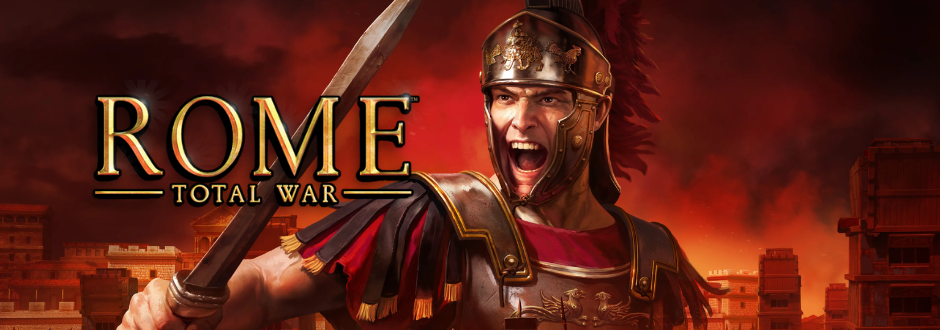
There are few things more exciting than sitting down to a game promising ancient empires, mighty armies and the opportunity to conquer half the known world. Total War: Rome certainly looks the part. Based on Creative Assembly’s much loved Rome: Total War video game, it brings the grand campaign to the tabletop, asking players to develop their factions, manage their economies, raise armies, conquer territory and ultimately earn enough Victory Points to claim supremacy. It is a fantastic concept, and visually it is an absolute triumph. Unfortunately, my experience was considerably less glorious, with an overly complicated ruleset making what could have been an excellent historical strategy game feel unnecessarily difficult to learn and play.

All roads lead to Rome
Total War: Rome attempts to recreate the grand strategy of the video game rather than simply turning it into a conventional battle game.
Players take control of one of several factions, including Rome, Carthage, Greece and the Barbarian Tribes, each with their own faction boards, developments and military options. The enormous map covers the ancient Mediterranean world, with regions, roads, mountains, rivers, ports and sea areas all playing a role.
The objective is straightforward. Expand your territory, develop your economy, build your armies and outmanoeuvre your opponents until the game reaches its final round. The player with the most Victory Points at the end wins.
Getting there, however, is rather more complicated.

Five phases to conquer the world
A round is divided into five phases: Initiative, Agents, Taxation, Campaigning and Spending.
The Initiative Phase establishes the order in which players act. You can spend gold to improve your initiative position, with the winner choosing who goes first and the direction play proceeds around the table. It is a small but useful strategic decision, as acting first can be valuable, but so can control the order in which everyone else takes their turn.
The Agent Phase is where things become considerably less civilised. Agents can move around the map and perform actions such as diplomacy, espionage, assassination, bribery and provoking unrest. Action cards can also be saved for their event effects or converted into gold, meaning you are constantly deciding how best to use the resources in your hand.
Taxation is thankfully rather more straightforward. Your territories generate income, although unrest can reduce what you collect. Developments such as markets and connected roads can improve your economy, while other locations provide additional benefits.
Then comes the Campaigning Phase, where armies and navies finally get to earn their keep. Armies can move between regions, attack opponents, suppress unrest and capture territory, while navies transport armies and engage enemy fleets.
Finally, the Spending Phase allows you to spend your carefully collected gold on recruitment, buildings, roads, walls and faction developments.
Then the whole process starts again.
On paper, it is an impressive attempt to recreate the many layers of a Total War campaign. Unfortunately, learning how all of those layers interact is where my problems began.
A beautiful ancient world
Before getting into the criticism, there is something that absolutely deserves recognition.
This is a beautiful game.
The map immediately commands attention, covering the ancient world in a colourful and detailed representation of the Mediterranean. The miniatures add plenty of character, while the faction boards and cards are similarly well presented.
There is an enormous amount of table presence here. Set everything up and it genuinely feels like you are about to embark on a campaign of epic proportions.
It looks like a game about commanding an empire.
The problem is that getting to the point where you can actually command that empire is far less enjoyable.
The rulebook marches on Rome
My difficulties started during setup.
The instructions are spread across two booklets and a reference sheet, meaning there is a substantial amount of information to absorb before you can confidently begin. A complicated game is not necessarily a bad thing, but complicated games need clear rules.
Unfortunately, I found the rules convoluted, difficult to interpret and surprisingly easy to misread.
We repeatedly found ourselves searching for clarification about specific situations, checking different sections and trying to work out exactly what was intended. At times, the information simply did not seem to be there.
This made setting up the game an experience in itself.
Rather than feeling like we were being guided through the process, it felt as though we were piecing the game together ourselves. Eventually, we had to make our own decisions about how certain situations should work simply so that we could continue playing.
That is a particularly difficult problem for a game that is already asking players to remember a considerable number of rules.
When ambition becomes overwhelming
For someone who already knows and loves Rome: Total War, I can imagine much of this being easier to accept.
The connection to the video game is obvious throughout. You can see the familiar philosophy everywhere: build your economy, expand your borders, develop your faction, recruit troops and decide whether the neighbouring civilisation would make a better ally or conquest.
For a dedicated fan, that familiarity could make the learning process worthwhile.
For a regular board gamer, however, the sheer amount of information is overwhelming.
The game seems to want to recreate almost every aspect of its video game inspiration. Unfortunately, a computer can handle enormous amounts of hidden information and complicated calculations for you. Around a table, every rule needs to be explained, remembered and applied by the players.
I think Total War: Rome would have benefited enormously from being willing to simplify.
It does not need to reproduce everything the video game does. It needs to capture the feeling of playing Total War in a way that works particularly well as a board game.
Into battle

The battle system is one of the more ambitious elements of the game, and there is definitely something promising here.
Armies are represented by troop cards, allowing players to keep the exact composition of their forces hidden from opponents. Different units have their own characteristics, while terrain can influence how effectively they fight.
Battles are divided into different stages, including skirmishing, the main clash and attacks involving the flanks. Cavalry, generals and different troop types can all have important roles.
This creates considerably more tactical depth than simply comparing the strength of two armies and rolling a few dice.
Terrain also matters. Fighting in a particular region can affect which troops perform best, giving the map genuine strategic importance.
I enjoyed the idea behind this system.
Unfortunately, once again, there is a lot to remember.
The battle mechanics are sufficiently involved that they can become another obstacle to actually enjoying the game. There is a good system hiding underneath the complexity, but I found myself wishing it had been streamlined.
Let the dice decide
Luck also plays a significant role.
Dice determine the results of many battles, meaning even a carefully planned campaign can occasionally go spectacularly wrong. Some degree of randomness is entirely appropriate for a game about warfare, and it can certainly create memorable moments.
However, when combined with an already complicated ruleset, it can sometimes be frustrating.
You can carefully consider your army, the terrain and the strength of your opponent, only for the dice to have the final word.
Sometimes that is exciting.
Sometimes it is simply a little annoying.
A great idea that needed more work
And this is what makes my final verdict difficult.
There is a genuinely good game buried inside Total War: Rome.
The concept is excellent. The combination of territory, economics, diplomacy, faction development and tactical warfare has enormous potential. The visual presentation is superb and the connection to the video game is obvious without needing much explanation.
The problem is that the game seems to have tried to do too much.
Rather than taking the essence of Rome: Total War and creating a streamlined tabletop experience around it, it attempts to bring an enormous amount of the video game’s complexity to the table. The result is something that can feel more like work than play.
For experienced historical gamers, particularly those already familiar with the video games, there may well be enough here to make the effort worthwhile.
For me, there simply was not.
Rome was not built in a day
Total War: Rome is one of those games where I desperately wanted to love the idea more than I enjoyed the reality.
Visually, it is magnificent. The map, miniatures and cards create an impressive table presence and successfully capture the atmosphere of the ancient world. There are also some genuinely clever ideas in the gameplay, particularly the hidden army information and the way terrain influences battles.
Sadly, the rules hold the experience back.
The instructions are difficult to navigate, setup is unnecessarily challenging and the sheer number of rules makes the game overwhelming to learn. The battle system shows promise but could also benefit from considerable simplification, while the dice can have a substantial influence on the outcome of your carefully planned campaigns.
Ultimately, I think this is a great idea that turned into a disappointing game.
There is potential here, but I believe the rules would need to be reworked from the ground up to make the experience more accessible and enjoyable. With a simpler system that focused on the strongest elements rather than trying to replicate so much of the video game, Total War: Rome could have been something genuinely special.
For now, however, I would recommend admiring it from across the table rather than immediately declaring war.
About the Author
I am a massive history nerd who loves combining my fascination with the past with my hobby of playing games. I have a particular fondness for the Tudor period and medieval history, although I am always happy to disappear down another historical rabbit hole. For me, one of the best things about board games is being able to bring history to the table and experience it in a completely different way, even if that occasionally involves discovering that conquering an empire is considerably harder than it looks.