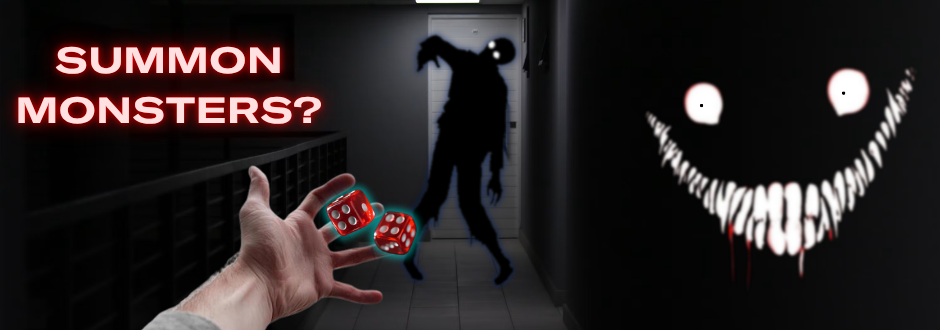
What if your RPG night came with a guaranteed death sentence, and everyone at the table knew it, except maybe you?
That’s the hook behind One of Us Will Die, a narrative-focused social deduction RPG that blends roleplaying storytelling with the paranoia of games like Secret Hitler, and Blood on the Clocktower.
But instead of voting people off the table or accusing your friends of being suspiciously “vibes-based evil,” this game takes things in a more theatrical direction: one character is destined to die, one player may be secretly working to speed that process up, and everyone else is trying to figure out how the story ends before it gets there.
It’s less “who is lying?” and more “who is writing their character’s tragic final chapter?”
A Roleplaying Game Built on Suspicion and Storytelling
Unlike traditional RPGs such as Dungeons & Dragons, where combat, exploration, and progression often take centre stage, One of Us Will Die leans more into narrative-first systems like Blades in the Dark.
In that game’s cinematic crime-world structure, players aren’t just rolling dice to succeed, they’re shaping a shared story of ambition, failure, and consequence. One of Us Will Die takes a similar philosophy, but layers on a social deduction core that constantly keeps players questioning intent as much as outcome.
Characters are built around narrative archetypes rather than stat-heavy builds, and play revolves around uncovering hidden roles, interpreting behaviour, and making choices that push the story toward an inevitable, dramatic conclusion.
A Growing Trend: Games Built Around Emotional Outcomes
This Kickstarter also fits into a wider movement in tabletop design: games that prioritise emotional storytelling, social pressure, and narrative consequence over traditional win states.
Systems like Dread use physical tension in the form of Jenga as a storytelling engine. Even modern narrative-focused games like Thousand Year Old Vampire embrace inevitability as part of the experience rather than something to avoid.
One of Us Will Die takes that idea and pushes it further by making death not a possibility, but a certainty woven into the structure of play.
The question isn’t whether someone will die.
It’s how long everyone at the table can pretend they don’t know it yet.
Final Thoughts
If Secret Hitler is about suspicion and Blood on the Clocktower is about structured deduction chaos, then One of Us Will Die is the dramatic storytelling cousin that insists every conversation carries narrative weight.
It’s tense, theatrical, and designed to turn even quiet moments into foreshadowing.
Just remember: in this game, you’re not just solving a mystery.
You’re surviving the story long enough to see how it ends.