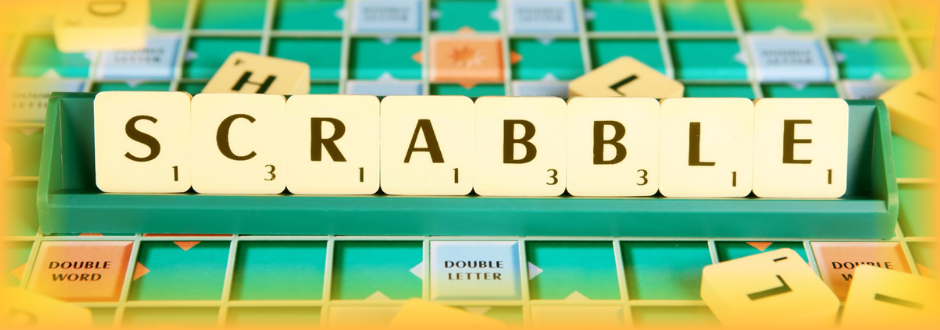
AI has already conquered some of the world's most complicated games, but there is one classic board game where humans are still putting up a serious fight. That game is Scrabble! While computers have become incredibly powerful at games such as chess and Go, the world's best Scrabble players can still compete with, and sometimes outperform, the strongest AI engines. One player in particular stands out. Nigel Richards is widely regarded as one of the greatest Scrabble players ever, and his results against computer opponents show just how difficult the game is to master.
From Go to Scrabble
The idea of computers beating humans at board games isn't exactly new. Back in 2015, Google's AlphaGo defeated Go world champion Lee Sedol in a landmark five-game match. The result was considered a major moment in AI development, particularly because Go has an enormous number of possible moves compared with games such as chess. One of the most famous moments came during the second game, when AlphaGo played its now-famous "move 37". The unusual move reportedly caught Sedol and other experts by surprise. Chess had already provided another major milestone for computers, with IBM's Deep Blue defeating reigning world champion Garry Kasparov in a match in 1997. So surely Scrabble should be easy enough for today's AI, right? Well... not quite.
Nigel Richards vs the machines
Scrabble might look simpler than chess or Go, but playing it at the highest level involves much more than finding the biggest word available. Players need to manage their rack, understand the board position, predict what their opponent might have, control valuable spaces and make decisions about risk. And according to data from the World English-Language Scrabble Players Association, Nigel Richards has been particularly good at doing exactly that. In tracked endgame positions, where there are no tiles remaining in the bag, Richards reportedly had a cumulative error rate of around 1.2%. The strongest Scrabble AI in the same analysis had an error rate of approximately 4.9%. That's a sizeable difference when every move can have a huge impact on the final score. Richards isn't simply good at Scrabble either. His career has produced an extraordinary number of tournament victories, including multiple world championship titles.
AI isn't useless
Before anyone starts celebrating humanity's glorious victory over the machines, there's an important catch. Scrabble AI is really, really good. Programs such as Quackle and BestBot can regularly compete with some of the strongest players in the world. They're capable of calculating huge numbers of possibilities and finding moves that would be almost impossible for a human to analyse manually. The difference is that Scrabble hasn't been completely solved by computers in the way some people might expect. One example comes from Quackle, a popular open-source Scrabble engine. In a reported 500-game match against grandmaster Kenji Matsumoto, Quackle won 248 games while Matsumoto won 252. That's incredibly close, but it's also a long way from the kind of dominance seen in computer chess.
Why is Scrabble so tricky?
Part of the problem is that Scrabble isn't simply about finding the highest-scoring word. The position of every letter on the board matters. So does the distribution of tiles remaining in the bag, the possible words your opponent could hold, and whether opening up a particular part of the board creates an opportunity for the other player. Then there's the language itself. A player needs an enormous vocabulary, but knowing a word isn't necessarily enough. Sometimes a lower-scoring move can be strategically stronger because it leaves better tiles on your rack or restricts what your opponent can do next. That creates a huge number of variables for an AI engine to consider. BestBot creator César del Solar has previously explained that Scrabble involves factors including board shape, inference, and volatility, rather than simply finding the highest-scoring move. That's part of what makes the game so difficult to solve completely.
The human advantage
The gap between humans and AI could obviously disappear in the future. Scrabble engines are continually being improved, and the technology available to developers is far more powerful than it was even a few years ago. Del Solar has previously suggested that it is possible for computers to eventually reach superhuman levels in Scrabble, including beating players such as Richards convincingly. For now, though, the world's elite players remain a serious test for the machines. And that's pretty fascinating when you consider how ordinary Scrabble looks on the surface. There's no massive game board, no armies to command, and no futuristic technology involved. Just a bag of letter tiles, a board, a dictionary, and a player trying to figure out what on earth they can spell with a rack containing three vowels and a Q.
A different kind of board game battle
Scrabble's ongoing battle against AI is a good reminder that complexity doesn't always come from having thousands of possible moves. The combination of language, probability, strategy and board management makes Scrabble an incredibly difficult game to master, even for computers capable of analysing positions far faster than humans. AI may have conquered some of the biggest names in the board game world, but Nigel Richards and other elite Scrabble players are still putting up a fight. For now, at least, humans still have a few tiles left to play!