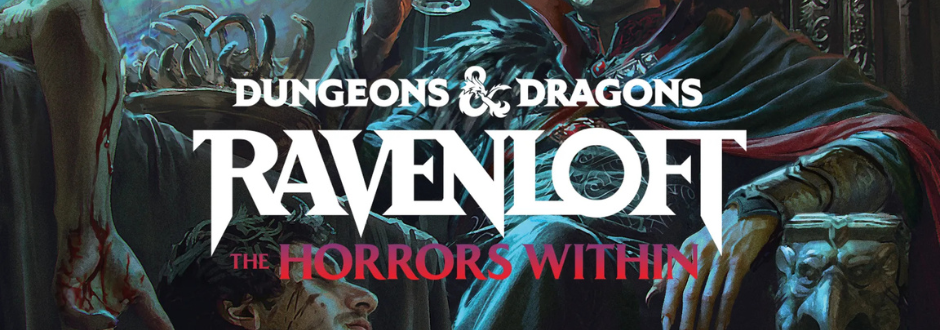
Some people think tabletop games are just cardboard, dice, and long arguments about rules. Those people are wrong.
What’s actually happening around a table full of snacks, character sheets, and suspiciously detailed backstories is something much more interesting: a story is being born in real time and nobody fully knows how it’s going to end.
You’re Not Playing a Game… You’re Creating a Story
In a movie, the hero’s fate is already decided. In a book, the ending is already written. In a tabletop role-playing game, someone says, “I try to convince the dragon to join our party instead of fighting us,” and suddenly the entire plot veers off in a completely unexpected direction.
That’s the magic of games like Dungeons & Dragons, where players collectively build a fantasy story together. One moment you’re carefully planning a dungeon crawl, and the next you’re negotiating with a suspicious goblin who may or may not be in charge of the entire kingdom.
Or maybe you step into something darker and more intense, like Mörk Borg, where the world itself feels like it’s falling apart and every decision carries a sense of doom, chaos, and strangely beautiful storytelling.
If you prefer fast-paced criminal drama, Blades in the Dark drops you into a gritty city of heists and haunted alleyways, where your crew’s reputation and relationships are just as important as the loot you’re stealing.
Each of these games doesn’t just tell you a story - it gives you the tools to make one happen.

Dice: Tiny Agents of Chaos
Dice are not just tools for generating random numbers. They are tiny fate engines that decide whether your bold plan succeeds spectacularly or collapses into comedic disaster.
A good roll can turn an impossible moment into a legendary triumph. A bad roll can turn a carefully prepared speech into an accidental insult that sparks a war. And somehow, those failures often become the most memorable parts of the entire story.
Stories That Write Themselves While You Play
What makes tabletop games special is that no one is fully in control. Even the Game Master, the person guiding the story, is constantly reacting to the unexpected choices of the players.
In Call of Cthulhu, a quiet investigation can quickly spiral into uncovering ancient horrors that were absolutely not part of your original plan. A simple trip to a library might end with your character questioning reality itself, their sanity hanging on by a thread.
In Pathfinder, what starts as a straightforward fantasy quest can evolve into an epic saga involving political alliances, cursed artifacts, and party members making increasingly questionable life choices in the name of “strategy.”
Meanwhile, Vampire: The Masquerade turns storytelling into a tense web of secrets, social manipulation, and moral ambiguity, where a single conversation can be just as dangerous as any battle. One poorly chosen word might not just ruin your night - it might ruin your entire (un)life.
Every session becomes a mix of planning, improvisation, and complete chaos in the best possible way.

The Real Game Happens After the Session
Here’s the secret nobody tells you: the best storytelling often happens after the game ends.
That’s when everyone starts laughing about the time someone tried to intimidate a king and rolled so badly they ended up apologizing instead. Or when a dramatic sacrifice becomes a running joke because it technically didn’t need to happen.
These games don’t just create stories. They create shared memories that turn into inside jokes, emotional highlights, and chaotic “you had to be there” moments.
Rules Are Just Suggestions… Kind Of
Yes, there are rules. And yes, they matter. But tabletop storytelling has a funny way of bending those rules when something exciting is happening.
Mechanics exist to support the story, not restrict it. If a moment feels dramatic, funny, or cinematic, players often lean into it rather than shut it down. That’s how a simple mission can turn into an emotional character arc, a disastrous failure, or an argument about whether a chicken counts as a magical companion.
Why It Feels So Good
There’s something special about a story where you don’t know the ending. You’re not just consuming a narrative; you’re living inside it, shaping it with friends, powered by imagination, dice rolls, and questionable decisions.
When it works, tabletop games stop feeling like games entirely. They feel like improv theatre, collaborative fiction, emotional rollercoasters, and occasionally complete nonsense all at once.

Final Boss Thought
Books tell stories. Movies show stories. Tabletop games hand you the pen, the world, and a bag of dice, and say: “Go on. Try not to ruin everything.”
You will anyway. And that’s exactly what makes it unforgettable.